








ARE YOU DAMAGING YOUR OWN CLUB?
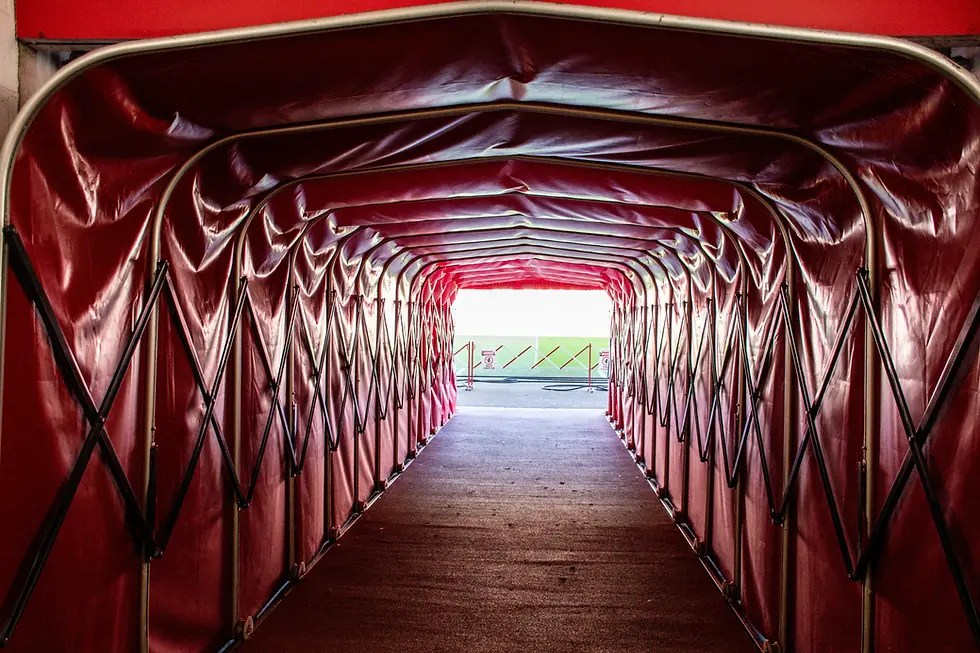
The level of negativity directed at Arsenal has become one of the most striking features of modern football culture. Every week, the club seems to attract a volume of criticism, mockery and hostility that goes far beyond normal rivalry. Yet psychological research suggests that this constant pressure could have an unexpected effect. Instead of weakening a group, external hostility can strengthen internal unity.
Studies by Craig Parks at Washington State University show that groups under threat often increase cooperation and cohesion. Michael Hogg’s work on social identity theory demonstrates that when a group feels targeted, its members become more bonded and more committed. Even the classic Robbers Cave experiment revealed that conflict and outside pressure can intensify loyalty within a group. Applied to football, this means the negativity surrounding Arsenal could be creating a stronger, more united fanbase and squad.
At the same time, research into out‑group fixation suggests that rival supporters who spend excessive emotional energy hating Arsenal may be weakening their own clubs. Henri Tajfel’s work on group identity shows that when people focus too heavily on an out‑group, they invest less in their own.
In football terms, fans who spend their days mocking Arsenal are not strengthening their own team’s identity or belief. Their emotional energy is displaced, and that displacement can subtly undermine their own group’s cohesion. This isn’t speculation; it’s a documented psychological pattern that appears across many different types of groups.
Football history shows that elite managers have long understood the power of this dynamic. Sir Alex Ferguson used perceived slights and external criticism to create a fierce “us against the world” mentality at Manchester United. George Graham did the same at Arsenal, building teams that thrived on discipline, defiance and the feeling that the outside world wanted them to fail.
The “backs against the wall” directive is not superstition. It is a deliberate psychological tool designed to sharpen focus, deepen unity and increase resilience. When a group believes it is being doubted or targeted, it often responds with greater determination and togetherness.
In elite sport, where margins are tiny, these emotional and psychological shifts matter. A stronger sense of identity, a tighter bond between players and supporters, and a shared feeling of defiance could become the small but meaningful edge that helps Arsenal push over the line. It is impossible to measure precisely, but it is entirely plausible that this dynamic could provide the one per cent difference that separates a team that competes from a team that finally completes its journey.
This raises an uncomfortable but important question for every football supporter, regardless of allegiance. If you spend more time criticising Arsenal than supporting your own club, are you actually helping your rivals? Are you strengthening the very group you want to see fail? And are you weakening your own team by diverting your emotional energy away from them? The research suggests this is worth thinking about. In the end, the energy meant to undermine Arsenal could be the same energy that binds them, and that possibility alone makes the whole dynamic worth questioning.


